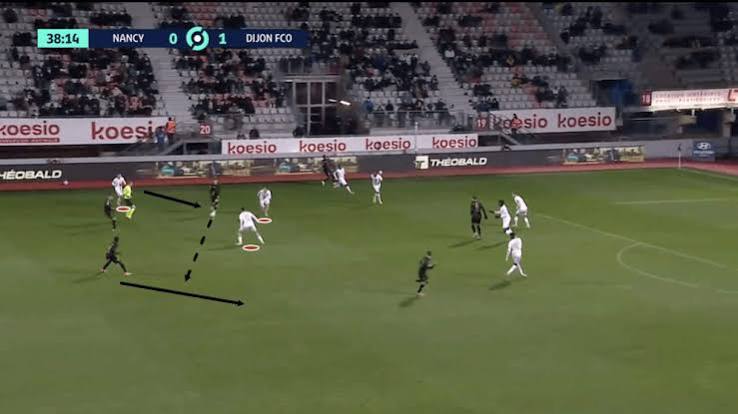
Relegation battles in the 2017/18 Ligue 1 season pushed teams at the bottom of the table into high‑stress situations where survival outweighed aesthetics, often increasing the likelihood of reckless fouls, tactical obstruction, and desperate penalty‑box defending. For bettors, these matches created distinct environments for card and penalty markets, because the incentives driving players and coaches were very different from mid‑table fixtures with little at stake.
Why Relegation Pressure Changes Card and Penalty Risk
The logic behind heightened card and penalty risk in relegation matches starts with how fear of dropping to Ligue 2 shapes player behaviour. Teams hovering near the bottom of the 2017/18 table faced not just sporting failure but major financial consequences, which encouraged defenders to take more “all‑or‑nothing” actions—last‑ditch tackles, shirt pulls in the area, and tactical fouls to stop counters. Over 38 games, those behaviours add up, particularly in fixtures billed as six‑pointers where a direct rival can be dragged into or out of the drop zone.
At the same time, referees often approach these survival games knowing tension will be high, which can cut in two directions depending on the official. Some adopt a strict posture early to keep control, pushing card counts upward, while others try to manage emotion through verbal warnings, allowing the match to simmer before eventually producing a flurry of bookings once thresholds are crossed. Bettors who simply assume “more pressure equals more cards” without accounting for the referee profile and tactical setup risk oversimplifying a dynamic situation.
Which Teams and Matches Defined the 2017/18 Relegation Battle?
To understand card and penalty patterns, it helps to anchor the discussion in the teams actually involved in the relegation fight. The 2017/18 Ligue 1 table shows that the bottom positions, including the automatic relegation and the play‑off spot, were contested among a group of clubs whose margins were extremely small, with goal difference and head‑to‑head results playing a decisive role. Those clubs entered the final third of the season knowing that a single mistake could swing the balance between direct survival, a relegation/promotion play‑off, or immediate demotion to Ligue 2.
Relegation‑zone clashes among these sides created matchups in which both teams had strong incentives to protect their defensive third with everything available. When both defences lacked composure or quality under pressure, this often translated into a higher volume of marginal challenges in and around the penalty area. On the other hand, when one relegation candidate visited a clearly superior opponent, survival logic could push them into an extremely low block where they invited pressure but tried to keep challenges controlled, which sometimes reduced outright card totals while still carrying meaningful penalty risk when fatigue set in.
Mechanism: How Survival Urgency Leads to More Cards
The mechanism linking relegation pressure to yellow and red cards revolves around risk‑averse decision‑making at the team level and risk‑seeking behaviour at the individual level. Coaches of struggling Ligue 1 sides in 2017/18 often prioritized compactness and deep defensive lines, narrowing space and forcing opponents into wide areas where crosses and cut‑backs had to be defended aggressively. Within that structure, individual defenders faced repeated one‑on‑one duels and recovery sprints; under fatigue and emotional stress, those duels became more likely to end in late tackles or pulls that draw bookings.
Red cards usually emerged from a combination of context and accumulated frustration rather than isolated moments. A side already trailing in a must‑not‑lose game could resort to risky tackles to prevent a second goal, raising the chance of serious fouls or second yellows. Similarly, goalkeepers and last defenders sometimes chose to commit professional fouls on clear goal‑scoring opportunities, especially when a loss would push them deep into the relegation zone. For bettors, these structural features explain why certain survival fixtures are more conducive to card‑related wagers, but only after referee tendencies and player disciplinary histories are cross‑checked.
Comparisons: Relegation Clashes vs Normal Fixtures
Comparing relegation clashes with standard mid‑table games draws a sharp contrast in how cards are distributed over 90 minutes. Mid‑table fixtures, especially between sides with little to play for late in the campaign, often see more relaxed body language, fewer desperate tackles, and more willingness to accept defensive rotations instead of last‑ditch interventions. In survival games, almost every transition against a stretched back line is treated as an existential threat, increasing the likelihood of tactical fouls at midfield and high‑risk challenges in the box.
This difference does not guarantee that every relegation match will outperform the league’s average cards per game, but it skews the distribution: there is a higher probability of extremes—either tightly managed games that stay surprisingly controlled or emotionally explosive matches with a spike in bookings and a real chance of dismissals. For totals bettors, the key is not to assume a simple uplift across the board but to identify where specific matchups and referee assignments push a given fixture toward one end of that spectrum.
Penalty Dynamics in High‑Stakes Survival Matches
Penalty frequency in relegation battles is shaped less by the identity of the teams and more by the intensity of box defending under sustained pressure. Ligue 1 as a league has historically seen a steady flow of penalties across seasons, with attacking heavyweights such as PSG among the most frequent beneficiaries of spot‑kicks since 2017/18. When relegation candidates faced those stronger attacking units, their low blocks and reactive defending magnified the chance of clumsy contacts or handballs inside the area, particularly when players were slow to adjust body position under quick combinations.
Even in head‑to‑head relegation six‑pointers, penalties were a natural by‑product of chaotic second balls and packed penalty areas. Corners, long throws, and direct balls into the box forced defenders into repeated aerial duels where minor tugs, pushes, or misjudged headers could be enough for officials to award a penalty, especially under modern interpretations that favour attackers. For bettors, this means that evaluating penalty potential in these matches requires attention to attacking style (cross‑heavy versus combination play), defensive composure, and the referee’s historical willingness to point to the spot rather than rely on abstract notions of “luck.”
Data‑Driven Betting: Using Discipline and Penalty Stats
Among the listed perspectives, data‑driven betting offers the most robust frame for analysing yellow/red card and penalty opportunities in relegation battles. While 2017/18 specific per‑match card averages require historical databases, broader Ligue 1 card metrics reveal that the league often sits around roughly four cards per game, split between home and away sides, across recent seasons. Knowing where that baseline lies allows bettors to ask whether a particular survival fixture has enough additional stressors—intense rivalry, crucial table stakes, volatile referee—to justify expecting a material deviation from that average.
Similarly, penalty statistics that track which clubs win and concede more spot‑kicks across multiple campaigns show that certain tactical profiles consistently live at the penalty margins. For example, teams that attack heavily through the wings and commit many players into the box tend to both draw and concede more penalties, while sides with compact low blocks but limited offensive thrust may concede more than they win. Applying this lens to 2017/18 relegation candidates means looking beyond reputation to ask how they actually reached the bottom of the table—through porous defending in the area, blunt attack, or a combination of both—and adjusting penalty expectations accordingly.
To make this process concrete, a bettor can work through a simple sequence before committing to a card or penalty angle in a survival game:
- Check each team’s season‑long card and penalty record relative to league norms, focusing on fouls per match and penalties conceded.
- Identify whether the fixture is a direct six‑pointer or a match against a much stronger side where the underdog will spend long phases defending deep.
- Review the assigned referee’s historical card and penalty profile to see if they are above or below league averages in similar high‑pressure situations.
- Combine these elements into a qualitative assessment of whether the posted card or penalty markets reflect the true risk level.
This sequence forces each bet to pass a minimum threshold of evidential support, reducing reliance on intuition about “nervy games” and emphasizing measurable factors that can be tracked and refined over time.
Where UFABET Fits in a Discipline‑Focused Strategy
Once a bettor has built a structured method for assessing card and penalty opportunities in relegation battles, the next question is how efficiently that method can be implemented in real markets. When someone decides to place those wagers through a particular sports betting service, details such as the range of card markets, availability of penalty‑related lines, and the clarity of settlement rules become operationally important. In that context, evaluating ufa168 แทงบอลดีสุด should revolve around how well its market catalogue, odds updates, and record‑keeping tools support a repeatable, discipline‑oriented strategy rather than nudging the user toward ad‑hoc selections driven purely by match tension and live commentary.
Distinguishing Matches with Genuine Red‑Card Potential
Not every relegation clash deserves a speculative red‑card bet, and distinguishing viable spots from noise is a crucial skill. Historical league records show that red cards occur far less frequently than yellows, even in seasons with high disciplinary totals, which means that any wager on a dismissal must overcome long odds and significant variance. Bettors who treat every survival game as a guaranteed flashpoint risk paying a premium price for a low‑frequency event, especially if bookmakers have already adjusted lines to reflect public expectation of chaos.
Instead, a data‑driven and contextual approach focuses on specific risk factors: defenders with a history of multiple bookings in short spans, tactical systems that leave centre‑backs repeatedly exposed in one‑on‑one situations, and referees whose threshold for straight reds or second yellows is demonstrably lower than their peers. Matching those elements to the exact stakes of the fixture—must‑win at home, desperation away performance, or a play‑off decider—allows bettors to narrow down the list of games where a dismissal is realistically more probable than usual, improving the risk–reward profile of any red‑card market considered.
Integrating casino online into a Multi‑League Disciplinary Model
For bettors who track card and penalty angles across multiple leagues, from Ligue 1 to other European competitions, organisational discipline becomes as important as analytical insight. Managing different kick‑off times, competition rules, and disciplinary thresholds demands an environment where data and wagers can be monitored without confusion. In scenarios where a bettor accesses markets through a casino online website that incorporates sports betting, a key question is whether its interface, reporting features, and limit structures help maintain a coherent, cross‑league model of disciplinary risk or instead fragment attention through scattered menus and frequent distractions that undercut the consistency of decision‑making.
Summary
Ligue 1 relegation battles in the 2017/18 season created a distinctive context in which yellow and red cards, along with penalties, became more than random events, emerging instead from the structural pressures of survival football. Teams fighting to avoid the drop often defended deeper and with greater desperation, increasing the likelihood of tactical fouls, last‑ditch tackles, and marginal contacts inside the penalty area, though actual outcomes still depended heavily on referee tendencies and tactical setups. For bettors, the most reliable opportunities lay in combining table stakes, team disciplinary profiles, and officiating data into a disciplined, data‑driven framework, using card and penalty markets only when those elements aligned instead of assuming that every high‑pressure match would automatically turn into a booking and spot‑kick frenzy.